Adult product guides
What Is the Difference Between Laws, Technical Standards, Industry Guidelines, and Certification?
Laws, technical standards, industry guidelines, and certification are not synonyms—whether a standard is mandatory depends on how it is referenced. Clearly distinguishing these documents reduces duplicate testing and reveals materials with no real evidentiary value.
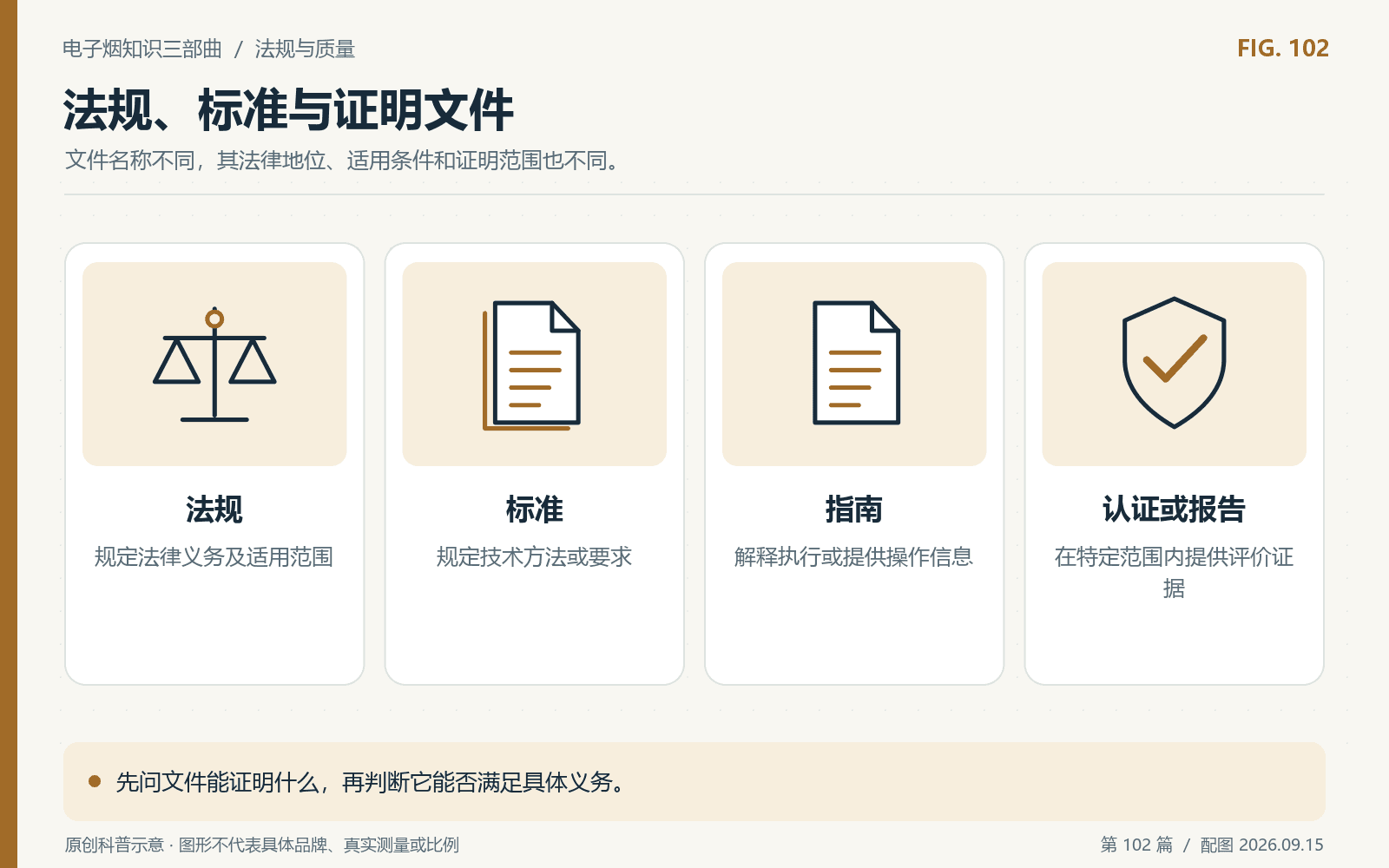
*Four types of documents shown side by side; whether a standard is mandatory still needs to be verified against how it is referenced.*
Laws define responsibilities and constraints; technical standards specify requirements or test methods; guidelines help interpret and implement; and certification or accreditation provides proof of conformity or competence within a defined scope. They are not synonyms. Whether a standard is mandatory also depends on legal references, local systems, and contractual conditions.
For example, when a laboratory tests according to a certain standard, this only means that the listed items were evaluated under the stated conditions; and a laboratory's accreditation does not mean that every report it issues automatically covers all product regulations. A standard number must also be read together with its version and scope of application. ISO/IEC 17025 information
Contractual requirements also need to be identified separately. A customer may require a specific standard to be used; even if local law does not make it mandatory, this may still become a delivery condition agreed between the parties. Conversely, statutory obligations that are not written into the contract cannot be omitted either. Therefore, a compliance checklist should ideally distinguish legal requirements, contractual requirements, and internal company requirements, so as to avoid treating the three as a single source in a dispute.
When a company receives a "certification scheme," it should ask what is being certified, who the issuing body is, what documents it is based on, and whether it can be publicly verified. Dressing up a self-declaration as government approval, or describing a method standard as a health certification, would mislead readers. Clearly distinguishing the nature of documents can reduce duplicate testing and help identify materials that have no actual evidentiary value.
Updated: