Adult product guides
Why Are E-Cigarettes Regulated by Multiple Sets of Laws?
E-cigarettes have the attributes of a chemical mixture, an electrical device, a nicotine product and a consumer product, so they are covered by multiple, overlapping legal regimes. Obtaining one registration does not prove full compliance; a mutually consistent chain of evidence is needed for each specific product and market.
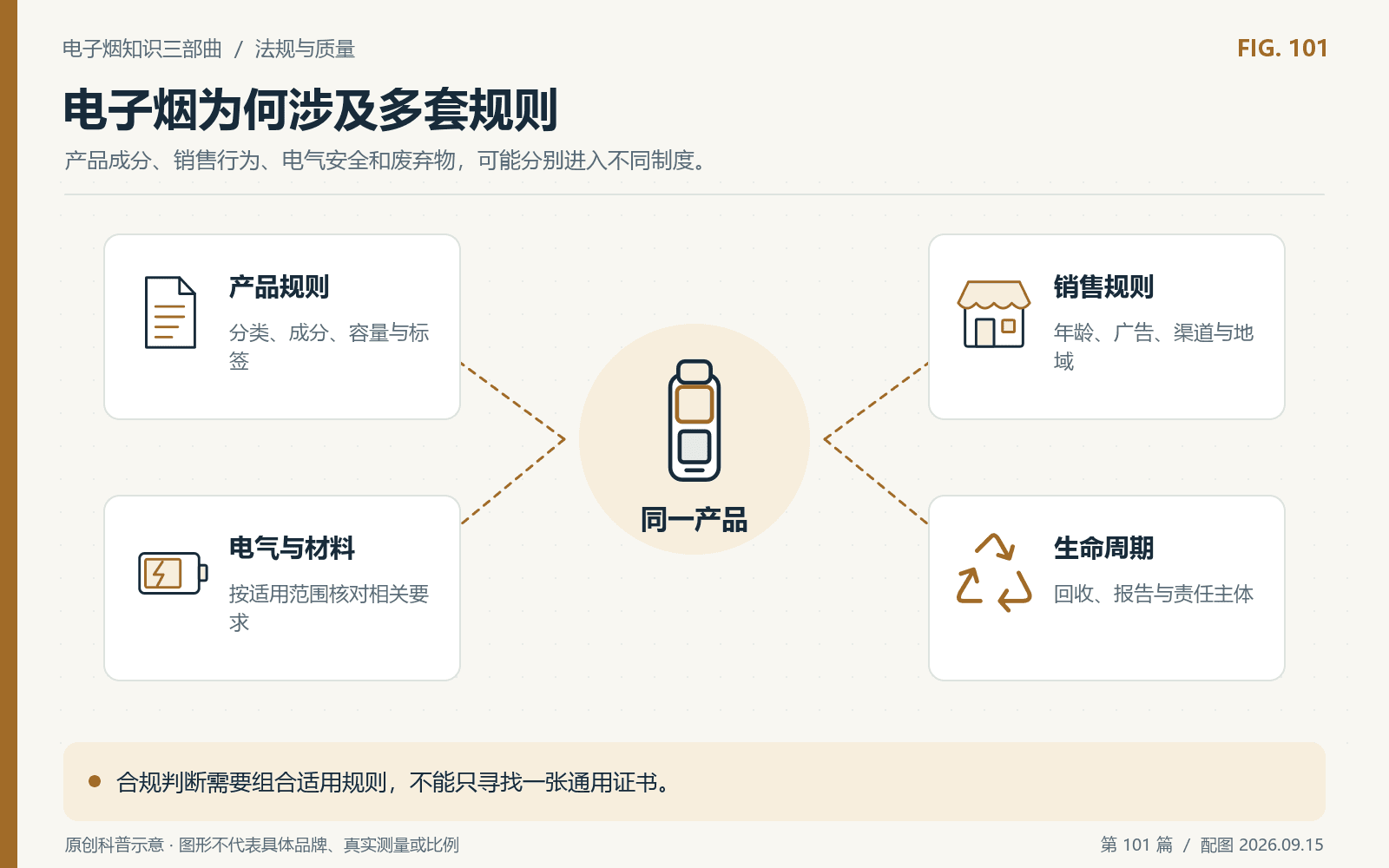
*Four regulatory dimensions explain why e-cigarettes require cross-domain verification.*
E-cigarettes simultaneously have the attributes of a chemical mixture, an electrical device, a nicotine product and a consumer product. One set of laws may focus on health warnings, another on hazardous chemical information, and yet other regimes cover batteries, waste and sales practices. Therefore, obtaining a particular registration does not prove that all requirements have been met.
Taking the EU as an example, the TPD sets out specific requirements for e-cigarettes for consumer use; e-liquids may also fall under CLP and REACH, while electrical and waste obligations are assessed separately according to the specific product. EU e-cigarettes framework The applicability conditions of these regimes do not fully overlap, and nicotine-free products cannot automatically exit all regulation.
A finished product can be broken down into questions that need to be answered: whether the liquid ingredients are lawful, whether the container is suitable, whether the device meets electrical requirements, whether the labelling is correct, who is responsible for import, and how it is recycled after disposal. Different questions may be evidenced by different documents. When organising compliance work, listing the questions first and then finding evidence is more effective than first purchasing a so-called certification package, and it also makes it easier to identify whether the materials provided by a supplier genuinely cover the product.
When organising compliance work, responsibilities can be divided by product, chemicals, electrical, sales and recycling, with the responsible person and evidence noted for each item. The most common mistake is to describe a certain report as a "global pass". What really needs to be formed is a mutually consistent chain of documentation that can explain why this specific product meets the corresponding requirements in this market.
Updated: